Dry Matter Calculator for Pet Food
Dry matter % = nutrient % ÷ (100 − moisture %) × 100. Enter the moisture percentage and any nutrient percentages from your pet food’s guaranteed analysis to convert them to a dry matter basis — the fair way to compare wet and dry foods.
These figures describe nutrient concentration, not food quality. A higher dry-matter percentage for a given nutrient is not automatically “better” or more appropriate for your pet — suitability depends on your pet’s species, life stage, health status, and overall diet. This tool does not diagnose deficiencies or recommend a specific food.
Formula basis: standard as-fed-to-dry-matter conversion used in veterinary nutrition (see Sources below). New to this concept? Read Dry Matter Basis in Pet Food: How to Compare Dog & Cat Food for a full explanation with worked examples.
What Is Dry Matter in Pet Food?
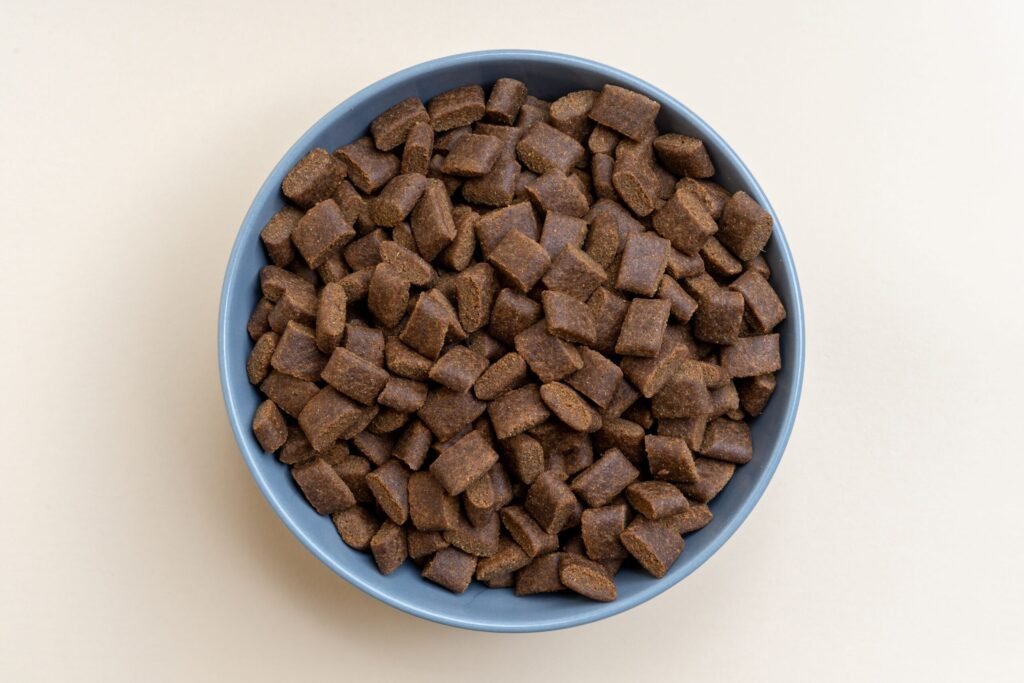
“Dry matter” is simply everything in a food that isn’t water. Every pet food label lists a moisture percentage as part of its Guaranteed Analysis, and subtracting that moisture from 100% gives the dry matter percentage — the portion of the food made up of protein, fat, fiber, carbohydrate, and minerals. Wet and canned foods can contain 70–85% water, while dry kibble typically contains only around 6–12% water, so the two food types have very different amounts of actual “food” once water is set aside.
Why Compare Pet Food on a Dry Matter Basis?
The nutrient percentages printed on a pet food label are given “as fed,” meaning they include whatever water is in the food. Comparing an as-fed percentage from a canned food directly against an as-fed percentage from a dry food is misleading, because the canned food’s numbers are diluted by water that the dry food simply doesn’t have. Converting both foods to a dry matter basis removes water from the equation entirely, so the comparison reflects actual nutrient concentration rather than how much water happens to be in each product.
How to Use the Dry Matter Calculator
Find the Guaranteed Analysis panel on your pet food’s label or bag. Enter the Moisture % into the calculator above — this is the only required field. Then enter any of the nutrient percentages you want converted: Crude Protein, Crude Fat, Crude Fiber, Ash, or Carbohydrate. You do not need to fill in every field; the calculator will only show dry-matter results for the nutrients you actually enter.
Dry Matter Formula
The conversion uses two steps, consistent with standard veterinary nutrition guidance:
- Step 1 – Dry matter percentage: Dry Matter % = 100 − Moisture %
- Step 2 – Nutrient on a dry matter basis: Dry Matter Basis Nutrient % = (As-Fed Nutrient % ÷ Dry Matter %) × 100
This is applied separately to each nutrient you enter (protein, fat, fiber, ash, or carbohydrate).
Dry Matter Calculation Example
Consider a food with 78% moisture and 10% protein (as fed):
- Dry matter = 100 − 78 = 22%
- Protein on a dry matter basis = (10 ÷ 22) × 100 ≈ 45.5%
So although the label shows only 10% protein, that protein makes up about 45.5% of the food once water is removed — a very different picture than the as-fed number alone suggests.
Wet Food vs Dry Food Example
This is where dry-matter conversion becomes genuinely useful. Compare a wet cat food listing 10% protein and 78% moisture against a dry cat food listing 30% protein and 10% moisture:
- Wet food dry matter = 100 − 78 = 22%; Protein DMB = (10 ÷ 22) × 100 ≈ 45.5%
- Dry food dry matter = 100 − 10 = 90%; Protein DMB = (30 ÷ 90) × 100 ≈ 33.3%
Read as-fed, the dry food looks far higher in protein (30% vs 10%). Once moisture is removed, the wet food actually has a higher protein concentration on a dry matter basis. This example illustrates why the conversion matters — it does not mean the wet food is the “better” choice for every pet; it simply shows a fair, water-adjusted comparison of the two labels.
Protein on a Dry Matter Basis
Protein is one of the most commonly compared nutrients between pet foods. Because canned and wet foods often list lower as-fed protein percentages than dry foods purely due to their higher water content, dry-matter conversion is especially important when comparing protein levels between food formats. A dry matter protein comparison does not by itself indicate protein quality, digestibility, or amino acid completeness — only concentration.
Fat on a Dry Matter Basis
The same principle applies to fat. A wet food’s as-fed fat percentage will typically look lower than a dry food’s, simply because of the water dilution effect. Converting to dry matter basis allows a more meaningful comparison of fat concentration between formats, which can be useful context when discussing calorie density or weight management with your veterinarian.
Can You Calculate Carbohydrates From a Pet Food Label?
Most pet food labels do not print a carbohydrate percentage directly. Carbohydrate content can be estimated using a method called “carbohydrate by difference” (sometimes called nitrogen-free extract, or NFE): 100% minus the percentages of moisture, protein, fat, fiber, and ash. This calculator can provide that estimate only when you enter a value for Ash %, since omitting it would require silently guessing a number that isn’t on your label.
It is important to understand this is an estimate, not a laboratory-measured value. The by-difference method lumps together true digestible carbohydrate with soluble fiber, trace vitamins, and any rounding or measurement variation from the other guaranteed-analysis figures, so it can overstate actual digestible carbohydrate — particularly in foods high in soluble fiber. If Ash % isn’t available on your label, this calculator will simply omit the carbohydrate estimate rather than presenting a number that could be misleading.
What Dry Matter Numbers Do NOT Tell You
Dry matter percentages describe nutrient concentration, not nutrient quality, ingredient sourcing, digestibility, or whether a food is complete and balanced for a particular life stage. A food with a higher dry-matter protein percentage is not automatically healthier, more appropriate, or higher quality than one with a lower percentage. These numbers also say nothing about calorie density, amino acid profile, or how well an individual pet tolerates or digests the food. Dry matter comparison is one useful piece of context, not a verdict on which food to choose.
Common Mistakes When Comparing Pet Foods
- Comparing as-fed percentages directly between wet and dry foods. This is the single most common and most misleading mistake, since moisture content differs so much between formats.
- Assuming a higher dry-matter number always means “better.” Concentration is not the same as suitability, quality, or digestibility.
- Treating an estimated carbohydrate-by-difference value as a precise lab measurement. It is a calculated estimate with known limitations, not a guaranteed figure.
- Ignoring life stage and health status. A nutrient level appropriate for a healthy adult dog may not be appropriate for a growing puppy, a senior pet, or a pet with a medical condition.
- Switching foods based solely on a dry-matter comparison. Diet changes, especially for pets with health conditions, should involve your veterinarian.
When to Ask Your Veterinarian or Veterinary Nutritionist
This calculator is an educational comparison tool, not a diagnostic or dietary-recommendation tool. Pet food suitability depends on many factors this calculator cannot evaluate, including species, life stage, existing health conditions, calorie density, overall nutrient adequacy, and whether a food is labeled “complete and balanced.” If your pet has a medical condition, is on a therapeutic or prescription diet, or you are considering a significant diet change, consult your veterinarian or a board-certified veterinary nutritionist before making changes based on label comparisons alone.
Frequently Asked Questions
What is a dry matter basis calculation?
It’s a way of converting the nutrient percentages on a pet food label, which are listed “as fed” (including water), into percentages that exclude water entirely. This is done by dividing each as-fed nutrient percentage by the food’s dry matter percentage (100% minus moisture%) and multiplying by 100. It allows fair nutrient comparisons between foods with very different moisture levels, such as wet and dry pet food.
Why can’t I just compare the protein percentages printed on two food labels?
Printed percentages are “as fed,” meaning they include each food’s water content. Because wet and canned foods can contain 70–85% water while dry foods contain roughly 6–12%, the as-fed numbers are diluted very differently and are not directly comparable. Converting both foods to a dry matter basis removes water from the comparison.
Does a higher dry matter percentage mean a food is better?
No. A higher dry-matter percentage for a nutrient reflects a higher concentration of that nutrient once water is removed — it does not by itself mean the food is healthier, higher quality, or more appropriate for your pet. Suitability depends on your pet’s species, life stage, health status, and the food’s overall nutrient profile, not one number in isolation.
Can this calculator tell me how many carbohydrates are in my pet’s food?
Only as an estimate, and only if you enter an Ash % value. Most labels don’t print carbohydrate directly, so it can be estimated “by difference” (100% minus moisture, protein, fat, fiber, and ash). This is a calculated approximation, not a laboratory measurement, and can overstate true digestible carbohydrate in foods high in soluble fiber.
Where do I find the moisture and nutrient percentages for my pet’s food?
Look for the “Guaranteed Analysis” panel on the pet food bag, can, or label. It typically lists minimum percentages for crude protein and crude fat, a maximum for crude fiber and moisture, and sometimes ash. Not every nutrient is printed on every label — enter whichever values are available.
Should I switch my pet’s food based on a dry matter comparison?
Not on this basis alone. Dry matter percentages are a useful comparison tool but don’t reflect ingredient quality, digestibility, calorie density, or whether a food is complete and balanced for your pet’s life stage. If you’re considering a diet change, especially for a pet with a health condition, talk to your veterinarian or a board-certified veterinary nutritionist first.
Sources
- Merck Veterinary Manual – Dog and Cat Foods (dry matter conversion formula and worked example).
- VetGirl Veterinary Continuing Education – How to Interpret Pet Food Labels (as-fed to dry-matter conversion steps, reviewed by a veterinary nutritionist).
- Tufts University Cummings School of Veterinary Medicine, Petfoodology – Carb Confusion Part 2: Measuring Carbs (carbohydrate-by-difference / nitrogen-free-extract methodology and limitations).
- Merck Veterinary Manual – Nutritional Requirements of Small Animals (general moisture content ranges of wet vs. dry pet foods).
Related: Dry Matter Basis in Pet Food (guide) · Dog Protein Calculator · Dog Food Calculator · Cat Food Calculator · Dog Nutrition Hub · Cat Nutrition Hub